
Ecological Surveys · Bats
Bat Surveys for Planning Permission
Cost, timing and exactly what you need — licensed bat surveys that give your planning application a clear, defensible answer.
Do I need a bat survey for planning? You are likely to need one if your proposal affects a building or tree with bat roost potential — a barn conversion, re-roofing, extension, demolition or tree felling. Bats and their roosts are protected by law, so most councils require a bat survey before they will validate or approve the application.
Almond Arb & Ecology carries out bat surveys across Leicestershire under a Class 2 bat licence — Leicester, Loughborough, Hinckley, Melton Mowbray, Market Harborough, Coalville and the surrounding villages. We give you a clear report your planning authority will accept, and honest advice on timing so your application isn’t delayed.
When does planning require a bat survey?
All UK bat species and their roosts are protected under the Wildlife and Countryside Act 1981 (as amended) and the Conservation of Habitats and Species Regulations 2017. Because of that protection, a local planning authority will normally ask for a bat survey when a proposal could disturb a roost. Common triggers include:
- Barn conversions and conversions of other rural or older buildings
- Re-roofing, roof-space works, or removing soffits, fascias and cladding
- Extensions, demolition or significant renovation of older buildings
- Works to, or felling of, mature trees with cavities, splits or loose bark
- Development close to woodland, watercourses or known roosts
If your building or trees have roost potential, expect the planning officer to make a bat survey a condition of a valid application. Submitting the survey up front usually speeds the whole process up.
Survey types: what you’ll actually need
1. Preliminary Roost Assessment (PRA)
The starting point for almost every project. A daytime inspection of the building or tree for signs of bats and features that could support a roost (droppings, staining, gaps, cavities). The PRA report states whether there is negligible, low, moderate or high roost potential — and whether any further survey is needed.
2. Bat Emergence & Re-entry Surveys (BEAS)
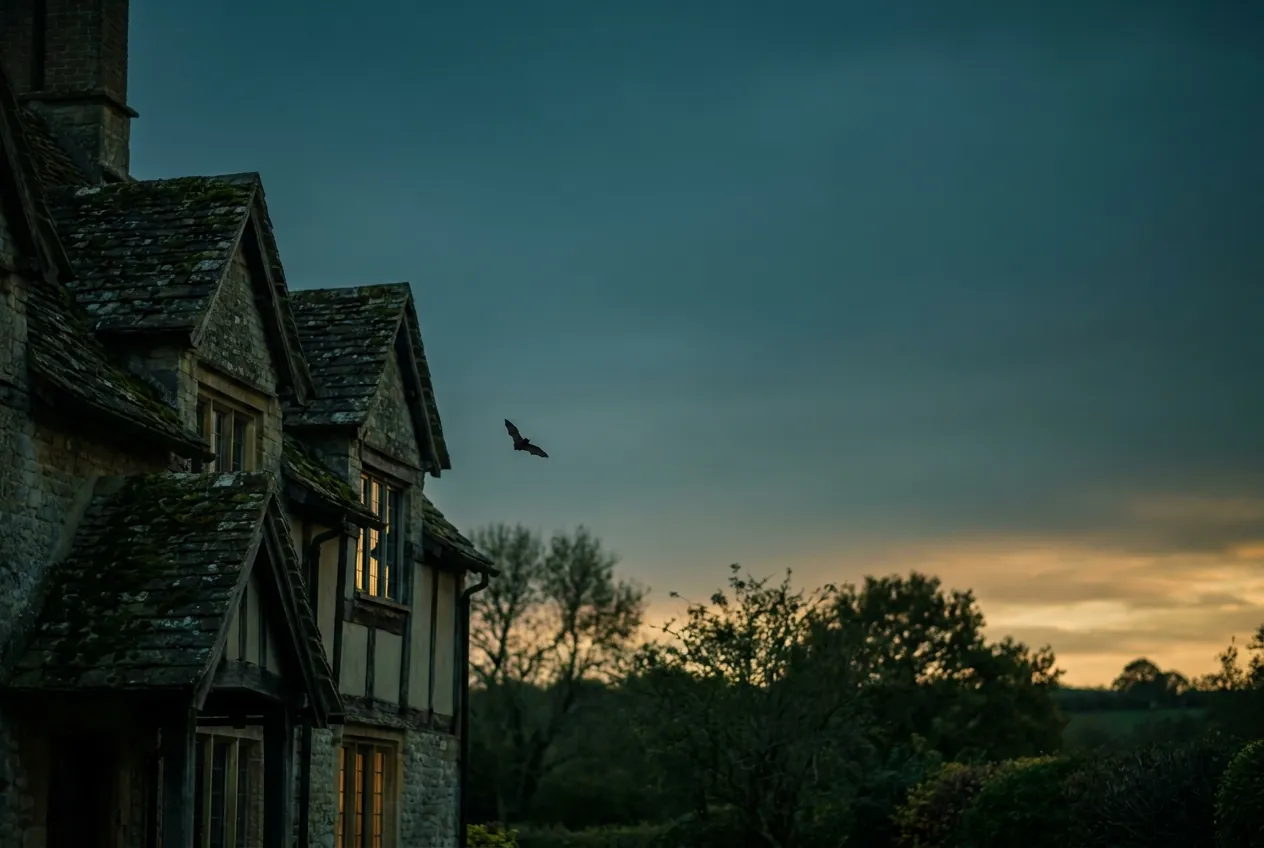
If the PRA finds roost potential, the next step is dusk emergence and/or dawn re-entry surveys, where surveyors watch the building at the times bats leave and return. These can only be done in the active season and typically involve two to three visits depending on the roost potential found.
How much does a bat survey cost?
Every building is different, so we always give a fixed quote — but these are the typical UK ranges to help you budget:
| Survey | Typical cost | When |
|---|---|---|
| Preliminary Roost Assessment (PRA) | from £300–£500 | Any time of year |
| Emergence / re-entry survey (per visit) | from £400–£600 | May–September only |
| Typical scheme where roost potential is found | from ~£1,200 | PRA + 2 visits |
Costs rise with the size and complexity of the building, access, and how many visits the roost potential requires. A simple PRA that finds negligible potential may be all you need.
Bat survey season & timing
This is the single most important thing to plan around. A PRA can be done at any time, but emergence/re-entry surveys can only be carried out from roughly May to September, when bats are active and using roosts. If you leave it late and a PRA (done in, say, October) flags roost potential, you may have to wait until the following May for the activity surveys — delaying your planning decision by months. Booking the PRA early is the way to avoid that.
How long is a bat survey valid?
Survey results are generally accepted as valid for 12 to 18 months. If your development slips beyond that window, the planning authority may require an updated survey before works begin.
Why use a licensed surveyor?
Disturbing bats or a roost without the right licence and mitigation is a criminal offence. Almond Arb & Ecology is licensed for bat surveys, fully insured (£5m public liability), and experienced in producing the clear, standards-compliant reports planning officers expect — with practical mitigation advice if a roost is found, so your project can still go ahead lawfully.
Get a bat survey quote
Tell us about your building or trees and your planning timescale, and we’ll come back within one working day with a fixed quote and the right survey plan for your application.
Bat survey FAQs
Do I need a bat survey to replace my roof?
Often yes. Re-roofing and roof-space works are a common reason roosts are disturbed, so if your building has any roost potential the council is likely to ask for a survey before approving the works.
What happens if bats are found?
It doesn’t stop your project — but it changes how it’s done. We advise on mitigation (timing of works, roost provision, and, where required, a European Protected Species licence from Natural England) so the development proceeds lawfully.
Can a bat survey be done in winter?
A preliminary roost assessment can be done in winter. Emergence/re-entry surveys cannot — they need the May–September active season.
Do you cover my area?
Yes — we cover Leicestershire and the surrounding counties. Get in touch with your postcode and we’ll confirm.
Need a bat survey?
Fixed quotes, licensed surveyor, reports planning will accept. Reply within one working day.
Related services
The essentials
- PRA: any time of year
- Emergence surveys: May–Sept
- Valid for 12–18 months
- Licensed & £5m insured